
Dental Crowns and Bridges in Placentia

What are dental crowns and bridges?

Dental crowns and bridges allow dentists to protect and restore damaged teeth. Typically, when tooth decay is severe enough that it can’t be treated with a filling, a dental crown will be used to cover, or cap, the tooth. Crowns are also commonly used to seal teeth that have been treated with root canal therapy. And occasionally, dental crowns from our Placentia office are used for cosmetic purposes or in smile makeovers.

A dental bridge is a type of dental work that replaces a tooth or a few consecutive missing teeth. Two dental crowns are placed on the healthy teeth living on either side of the gap left by your lost tooth. A false tooth, or pontic, is attached to the crowns and literally bridges the gap, replacing your missing tooth.
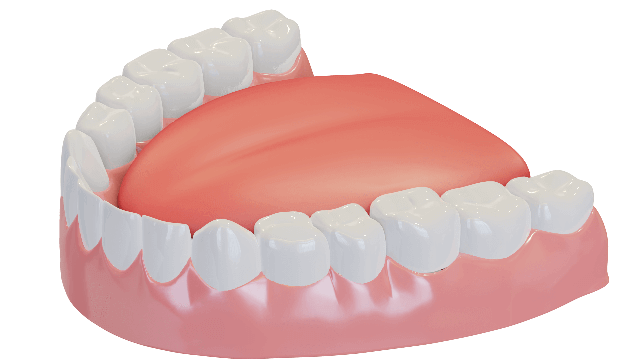
Dental crowns and bridges allow dentists to protect and restore damaged teeth. Typically, when tooth decay is severe enough that it can’t be treated with a filling, a dental crown will be used to cover, or cap, the tooth. Crowns are also commonly used to seal teeth that have been treated with root canal therapy. And occasionally, dental crowns from our Placentia office are used for cosmetic purposes or in smile makeovers. A dental bridge is a type of dental work that replaces a tooth or a few consecutive missing teeth. Two dental crowns are placed on the healthy teeth living on either side of the gap left by your lost tooth. A false tooth, or pontic, is attached to the crowns and literally bridges the gap, replacing your missing tooth.

Did you know...

Dental Crowns & Bridges - Tranquility Dental Arts, your dentist in Placentia

Dental crowns are also referred to as “caps” because they cap the existing tooth structure in order to restore it.

READY TO SCHEDULE YOUR APPOINTMENT IN PLACENTIA?

How dental crowns and bridges work together

PREPARATION OF ABUTMENT TEETH
Your Placentia dentist will clean and numb your mouth, and then begin to trim away a thin layer of enamel from the two teeth next to your missing tooth. These are known as “abutment teeth” and they will hold your crowns. Your bridge will permanently attach to these crowns.

TRIMMING & REMOVING DECAY

Once your abutment teeth have been prepared, your dentist will use dental putty and trays to take impressions of your teeth. These impressions will be used by a technician at a dental lab to build your dental bridge.

TEMPORARY BRIDGE

Depending on your needs, your Placentia dentist will place a temporary resin bridge to protect your prepared abutment teeth, or two temporary dental crowns. Either way, your prepared teeth will be covered and protected until your permanent bridge can be placed.

BRIDGE CHECK & ADJUSTMENT

Once your permanent bridge is ready, usually within a few weeks, you’ll come into the office to have the bridge checked for proper fit. Minor adjustments may be made by your dentist, if necessary, to ensure that your bridge looks and feels natural. If the bridge requires larger adjustments, it will be sent back to the lab for further refinement.

PERMANENT PLACEMENT

Once you and your Placentia dentist have determined that the fit of your bridge feels right, they will use powerful dental cement to attach it permanently to your abutment teeth, restoring your smile and your bite.

Types of dental crowns and bridges

LAB-MADE CROWNS

LAB-MADE CROWNS

Lab-made crowns are manufactured by experienced technicians at dental labs that specialize in building dental prostheses. Your Placentia dentist will take impressions, scans, and photos of your teeth, which will be sent directly to the lab.

Using an advanced manufacturing process, your crowns will be built out of durable ceramic and metal materials, and sent back to your dentist for the final fitting and placement. Lab-made crowns look and feel very natural, and are usually the most long-lasting and durable type of crown.

TRADITIONAL BRIDGES

TRADITIONAL BRIDGES

Traditional dental bridges are made out of two crowns, which are attached permanently to “abutment teeth.” These are the healthy teeth located next to one or more missing teeth within your mouth. Between these teeth, a metal framework is used to suspend one or more “pontics” (false teeth). These false teeth literally “bridge” the gap between your missing teeth, restoring your smile.

CANTILEVER BRIDGES

CANTILEVER BRIDGES

Unlike a traditional fixed bridge, which supports your bridge using two abutment teeth, a cantilever bridge uses only a single tooth to support your bridge. In this type of bridge, a single tooth is trimmed next to your missing tooth. Then, a bridge is made that consists of a single crown and an artificial tooth. The crown is attached to your abutment tooth, and then the artificial tooth is suspended in the gap where your missing tooth used to be, restoring your smile.

Cantilever bridges are less invasive than traditional bridges, since only one tooth has to be trimmed, and they are usually less expensive than traditional bridges. However, you must have a healthy mouth to get a cantilever bridge, and they typically can only be used in a few areas of the mouth.

MARYLAND BONDED BRIDGES

MARYLAND BONDED BRIDGES

A Maryland bridge does not require any removal of enamel or preparation of the adjacent teeth. In this treatment, a false tooth is built using a metal framework with “wings” that attach to the adjacent teeth. These “wings” are attached to the backs of your teeth using dental cement, holding the false tooth in place and restoring your smile. Maryland bridges are commonly used in the front teeth, and are ideal if you would like to restore your smile without any invasive dental treatment.

Did you know...

Dental Crowns & Bridges - Tranquility Dental Arts, your dentist in Placentia

Dental bridges can be used to replace up to 3 consecutive missing teeth.

THINK YOU MAY NEED A DENTAL CROWN?

Have questions about crowns and bridges? Find answers here.

Did you know...

Veneers - Tranquility Dental Arts, your dentist in Placentia

When properly placed and with good oral hygiene habits, dental crowns can last up to 15 years.

READY FOR YOUR NEXT DENTAL APPOINTMENT IN PLACENTIA?